
Becoming Good Soil III
In Part 3 of Becoming Good Soil, we examine organic matter as the spiritual foundation of humility, repentance, love, and dying to self. Using Matthew 13, Galatians 2:20, John 12:24, and Jesus’ teaching on pruning and fruitfulness, this post shows how brokenness before God creates a fertile heart where the Word can grow, multiply, and produce lasting spiritual fruit.
Rev360 Devotional
1/22/20263 min read
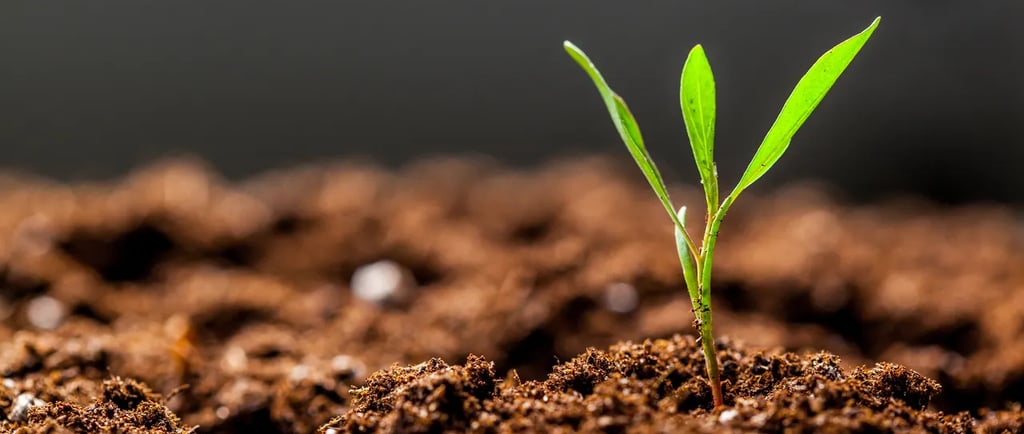
Day 3 – Organic Matter: Brokenness, Love, and Death to Self
📖 Scripture Focus: Matthew 13:23 • Galatians 2:20 • Psalm 51:17 • John 12:24
We began this journey: Becoming Good Soil—learning how to develop a heart that can receive the Word, understand it, and bear fruit.
Jesus said in Matthew 13:23 that the good soil represents those who hear the Word, understand it, and bear fruit. God has chosen us for fruitfulness:
📌 “I have chosen you… that you should bear fruit, and that your fruit should remain.” (John 15:16)
But the parable of the sower shows something sobering:
God is generous with His seed, yet many don’t produce.
Not because the seed is weak… but because the soil is unprepared.
So we looked at the 5 components of good soil:
Minerals, Organic Matter, Water, Air, Microorganisms.
Day 2 was Minerals = Truth & Doctrine.
Today is the second: Organic Matter.
🌿 1) What organic matter does in soil
Organic matter is made from broken and decomposed life—dead plants, dead organisms—things that once lived, but have died.
And here’s the key:
✅ Organic matter is what makes soil fertile.
Without organic matter, soil becomes sterile—it may exist, but it won’t produce maximally.
The richer the organic matter, the greater the fruitfulness.
That’s why in Matthew 13, fruit appears in levels: 30, 60, 100.
Different yield often reflects different soil quality.
❤️ 2) What organic matter represents in the heart
Spiritually, Organic Matter = Brokenness before God.
It is:
Humility
Repentance (quick to turn, quick to change)
Compassion
Love expressed in action
Death to self
A heart that can be “pruned” without resisting God
Organic matter comes from death—so spiritually, it points to the daily dying of self.
📌 “I have been crucified with Christ… it is no longer I who live, but Christ lives in me.” (Galatians 2:20)
A fertile heart is a heart where self keeps decreasing and Christ keeps increasing.
👣 3) What “death to self” looks like in real life
When self is dying and Christ is rising, something happens:
People start seeing Jesus through you.
That’s why believers were first called Christians in Antioch—because their lives looked so much like Christ that people couldn’t separate the message from the messenger.
This is the goal:
Not that people only hear you speak about Jesus, but that they encounter Jesus in how you live.
🔥 4) Love is the strongest form of organic matter
📌 “The love of God has been shed abroad in our hearts by the Holy Spirit.” (Romans 5:5)
But love has two sides:
The virtue of love (what God deposits in you)
The action of love (what you practice through sacrifice)
Love stays dormant until it becomes action.
And love in action is self-sacrifice.
Self-sacrificial living looks like:
giving yourself to God
giving yourself to God’s assignment
giving yourself to God’s people
giving yourself even to those around you
That’s why Scripture says:
📌 “Let us not love in word… but in deed.”
🪓 5) Pruning: the pain that protects fruitfulness
Jesus teaches that fruitfulness requires pruning.
Pruning is not punishment—it’s precision.
Sometimes what God cuts away isn’t “evil”… it’s just occupying space that belongs to Him.
Sometimes it’s a distraction, an attachment, a reputation, a comfort—something that competes for your heart.
A proud heart can’t carry fruit.
A hard heart won’t host growth.
📌 “A broken and contrite heart, O God, You will not despise.” (Psalm 51:17)
🔨 6) How God breaks hardness and produces organic matter
God’s Word is not only seed—it is also a tool.
📌 “Is not my word like fire… and like a hammer that breaks the rock in pieces?” (Jeremiah 23:29)
The Word becomes a “hammer” when you practice it; especially when it costs you.
Many people cry after sin, receive forgiveness, but never repent.
Forgiveness restores you.
Repentance re-directs you.
Repentance isn’t tears alone; it’s practical obedience.
Example: Scripture doesn’t say “negotiate with temptation.”
It says: FLEE.
And every time you obey, something breaks… and your heart becomes softer, looser, more fertile.
🙏 Prayer
Father, whatever has grown in my heart that You did not plant, whether planted by the enemy or planted by me, uproot it.
Kill every rival affection. Kill every ungodly attachment. Kill pride, flesh, and distractions.
Let whatever dies become organic matter—manure for fruitfulness—so Your Word can grow in me and produce lasting fruit.
Make my heart soft, humble, repentant, loving, and fully Yours. In Jesus’ name, Amen.
💭 Reflection Question
What is one thing in my life, good or bad, that may be competing for God’s space in my heart?
And what would fruitfulness look like if God pruned it?
Next: Day 4 — Water (the next component of Good Soil) 🌱